What Technologies Will Last?
PeterWalk
Note from the editor:
Though the following post is being posted after June, it is a valid submission for this year’s blog contest. The post was recieved in June but due to being on vacation, I was not able to post it until now.
– Andrew Smither
While I am on twitter, I follow many different topics and people. Some may be from friends I had on summer projects, some may be folks from around here, and most are news companies like USA Today, the nation’s biggest newspaper. Seemingly weekly I see a new product coming out in the tech universe, and right now the products seem to be the tablet, the newest smartphone, or 3d television. Will these products be a boom or failure? Allow me to take a look at some of the “greatest” things in techology or social media that have come out in the past decade or so.
Going back a few years ago, nobody knew what twitter even was, and now it has boomed. Several years before that, the big fad in technological stuff were netbooks and making the thinnest cell phones possible, but those have fizzled. Several years before that, high definition televisions were coming into their own, and wow have they boomed, with one in nearly every home.
Now, allow me to examine the three next “greatest” things in televisions, cell phones and tablets, and if they will boom or bust. In televisions, companies are trying to push 3d televisions, as now that the hi-def television has flooded the market, prices have gone down and now companies want to push the next “greatest” thing in 3d. While companies may think that these will succeed, I think that this fad will eventually go away, as most people have just bought hi-def televisions at a cost of $300 or more for a nice big screen. So, therefore, only the top 1 or 2% of Americans will want to spend that much on a product which has yet to run its course.
With cell phones, back in 2003 or so, the Motorola RAZR was the hottest thing in the market, but that went away fairly quickly once the hippest technological maker out there, Apple came out with the iPhone and revolutionized the industry with these handy little tools known as “apps”, short for applications came out and people found the value in just tapping an icon to send them to their favorite social media website or email or could use their phone as their own personal global positioning system, which the item now known as a smartphone is quickly replacing. The iPhone has spawned imitators, like the HTC Evo, the Samsung nexus S, and the ever growing DROID phones, but they are all wanting to be the iPhone. The smartphone is here to stay and will continually evolve I believe to be an item that more will have than have not.
Now, the tablet, which is basically a netbook, which is a smaller version of a laptop. Netbooks were coming into style when again, Apple decided to come out with the iPad, a tablet computer. With those unfamiliar with a tablet, it is basically a really big version of a smartphone, it has a touch screen, lots of apps, and a front facing camera, which can be used for face to face realtime talks. Tablets are incredibly popular right now, and this is toughest market to gauge if they will ultimately succeed or fail. As tablets are still relatively new to the market, only coming out 15 months ago, in April 2010. Tablets are convenient, as they can be taken anywhere to surf the web or watch a movie on or what have you, but does anyone really need three computer based electronics? A smarthphone, which is a phone, a gps, a camera, a music player and is incredibly convenient to view your emails and news on, a tablet, a seven to ten inch version of a smartphone without the phone capabilities and is really kinda bulky to carry around along with your smartphone. Then, there is the old standard of a personal computer or laptop. Laptops are essentially tablets, but without the apps. Laptops have comparable battery life, and have a ton more storage and are about as fast as a tablet. Then, there is the regular old pc, which lasts longer than a laptop, but lacks the portability of one. So, ultimately, when it comes down to it, I think tablets will fade off into the sunset, much like the old RAZR, the walkman, and the VCR.

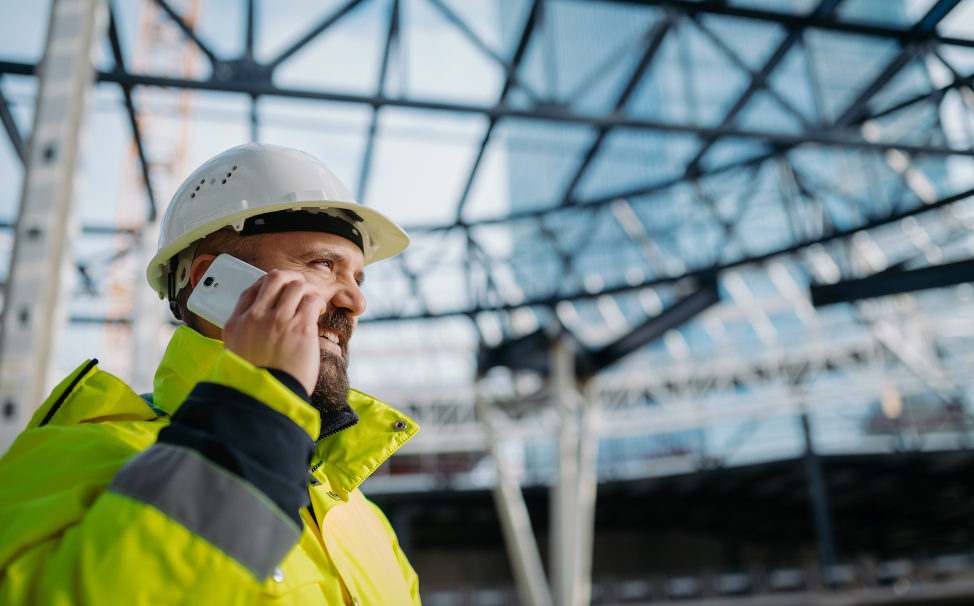
Modern construction and manufacturing sites are no longer just about heavy machinery; they’re digital ecosystems. Tablets, laptops, IoT sensors, and mobile apps are now essential for everything from blueprint access to production monitoring. These tools enable real-time collaboration, safety compliance, and operational efficiency. But when your workforce is spread across remote job sites or large facilities, keeping these systems connected and secure becomes a challenge. Construction Blueprint & Plan Access: Crews use tablets to view updated plans on-site, reducing errors and rework. Safety & Compliance Reporting: Mobile apps allow instant incident reporting and safety checks. Equipment Tracking: IoT sensors monitor heavy machinery usage and maintenance needs. Manufacturing Production Line Monitoring: Tablets and IoT devices track throughput and detect anomalies. Quality Control: Mobile devices capture and share inspection data in real time. Inventory Management: Connected devices streamline material tracking and reduce downtime. These tools keep projects moving, but only if they’re secure, updated, and accessible anywhere. Why Remote Access Is Critical Construction sites and manufacturing plants often operate in remote or rugged environments. Workers need secure, reliable access to company systems, whether they’re in the field, on the shop floor, or traveling between sites. Without proper management, connectivity issues and security gaps can lead to delays, data breaches, and compliance failures. How a Managed IT Services Partner Helps You Win Partnering with a Managed IT Services provider lik e Eberly Systems ensures: Centralized Device Management: Configure, update, and secure all devices remotely using Microsoft Intune. Enterprise-Grade Security: Microsoft Defender protects against threats across IT and OT environments. Identity & Access Control: Microsoft Entra ID enables MFA and conditional access for subcontractors and BYOD scenarios. 24/7 Monitoring & Support: Proactive threat detection and performance monitoring keep operations running smoothly. Scalable Solutions: Whether you have 50 devices or 500, policies and updates roll out automatically. This means your teams can access critical tools and data securely anytime, anywhere, without worrying about downtime or cyber risks. Construction and manufacturing thrive on precision and speed. Technology makes that possible, but only when it’s managed effectively. A trusted Managed IT Services partner doesn’t just keep devices secure, it keeps your business moving, your workforce connected, and your data protected. Ready to empower your teams and safeguard your operations? Contact Eberly Systems today for a free consultation.

Why Cybersecurity Hygiene Matters for SMBs
Why Leading with AI Matters for Small and Medium-Sized Businesses
Welcome to the Cyber Cold War

We're all in the same boat trying to avoid cybercrime! Here's our top ways to identify a potential phishing attempt.

Focus on integrating with new team members and new customers